
Belt-Drive vs. Direct-Drive: Which One is Right for You?
Belt-Drive vs. Direct-Drive: Which One is Right for You?
![[HERO] Belt-Drive vs. Direct-Drive: Which One is Right for You?](https://cdn.marblism.com/lc5NIfRVOhT.webp)
So you're ready to level up your vinyl setup. You've been browsing turntables online, maybe even stopped by our stores to chat with us about what's in stock. And then you hit that wall: belt-drive vs. direct-drive. What even is the difference? And more importantly, which one should you get?
Here's the good news: this doesn't have to be complicated. The choice really comes down to how you're planning to use your turntable. Are you spinning records at home on a lazy Sunday? Or are you scratching and mixing at parties? Let's break it down in plain English.
What's the Difference, Anyway? 🔍
Both belt-drive and direct-drive turntables do the same basic job, they spin your record so the needle can read the grooves and turn them into sound. The difference is how they spin that platter.
Direct-drive turntables have the motor positioned directly underneath the platter. Think of it like a skateboard wheel, the motor is right there, connected to what's spinning.
Belt-drive turntables use a rubber belt to connect the motor (which sits off to the side) to the platter. It's like a bicycle chain, but made of rubber instead of metal.
That's it. That's the main mechanical difference. But that simple design choice affects everything else about how the turntable performs.
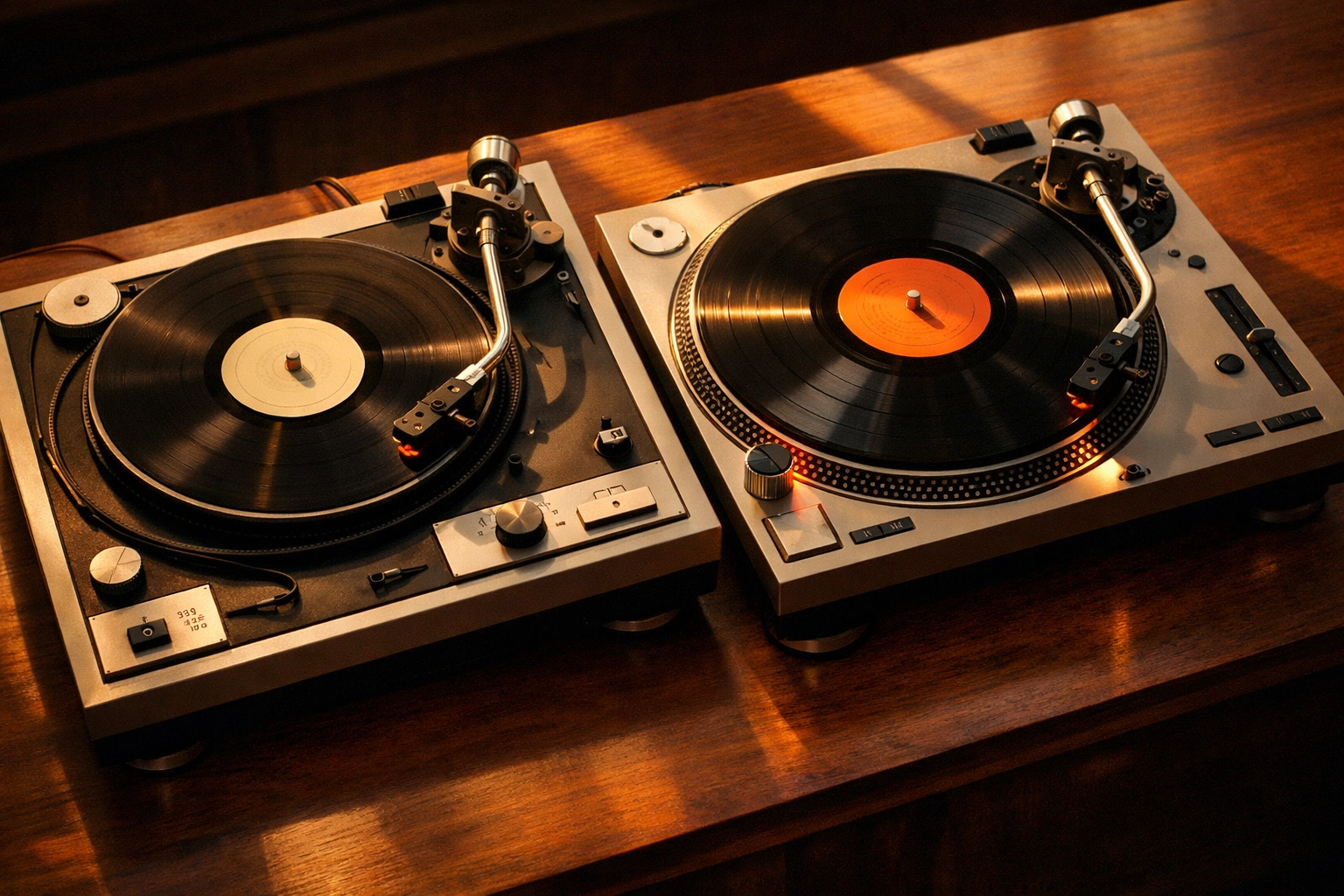
Direct-Drive: Built for Speed and Control ⚡
Direct-drive turntables are the workhorses of the DJ world. If you've ever seen a DJ at a club or watched a turntablism competition, they're almost always using direct-drive tables.
Why DJs love them:
- Instant startup – The platter hits full speed almost immediately. No waiting around for the motor to get up to 33⅓ RPM.
- High torque – You can physically spin the record backward or forward without damaging the motor. This is essential for scratching and beat-juggling.
- Consistent speed control – The motor makes constant micro-adjustments to maintain perfect speed, which is crucial when you're mixing two records together.
- Durability – Fewer moving parts means fewer things that can break down over time.
The most famous direct-drive turntable is the Technics SL-1200, which basically became the industry standard for DJs worldwide. If you walk into a radio station or a club, you're probably looking at a pair of these.
The downsides:
The motor is right there under the platter, which means any vibrations or electrical noise from that motor can potentially make it through to your speakers. Older or cheaper direct-drive models sometimes have an audible hum or buzz. Modern designs have gotten much better at isolating this, but it's still a consideration.
Also, that constant micro-adjustment the motor makes to maintain speed? Some audiophiles argue you can hear those tiny corrections as a lack of "smoothness" in the sound. Whether that's actually audible to most people is up for debate.

Belt-Drive: The Audiophile's Choice 🎵
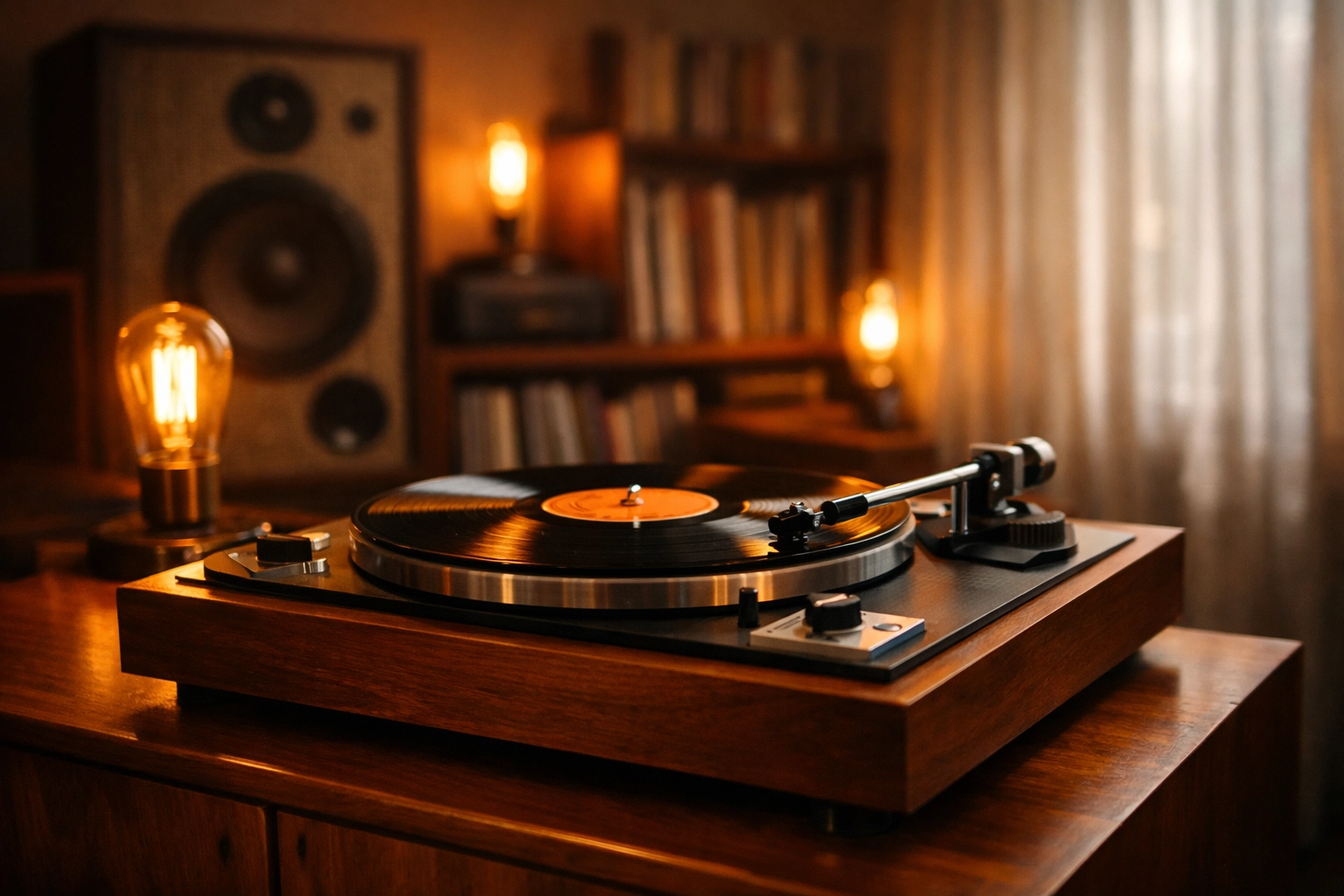
Belt-drive turntables are what you'll typically find in dedicated listening setups. They're designed with one goal in mind: make your records sound as good as possible.
Why listeners prefer them:
- Motor isolation – That rubber belt acts as a natural vibration dampener. The motor noise stays over there, and your music stays clean.
- Smooth, consistent rotation – Once the platter gets up to speed (especially if it's a heavy platter), it wants to stay at that speed. Physics does the work.
- Quieter operation – Less mechanical noise means less interference with your music.
- Generally better sound quality – For pure listening enjoyment, a well-designed belt-drive will usually outperform a direct-drive at the same price point.
The downsides:
Startup is slower. It might take 3-5 seconds for the platter to reach full speed. Not a big deal if you're just dropping the needle on Side A and settling in, but it makes beat-matching basically impossible.
The belt will eventually wear out. Depending on how much you use your turntable, you might need to replace it every few years. The good news? Replacement belts are cheap (usually $10-20) and easy to swap out yourself.
And if you try to spin the platter backward by hand while the motor's off, you can damage the belt or motor. These tables aren't built for DJing.
Sound Quality: What Will You Actually Hear? 👂
Here's where things get real: for the average listener, both types can sound excellent. We're not talking night-and-day differences here.
If you're comparing a $300 belt-drive to a $300 direct-drive, the belt-drive will probably give you cleaner sound with less motor noise. But if you're comparing a $1,500 direct-drive to a $300 belt-drive? The expensive direct-drive is going to win every time.
What matters more than the drive type:
- Quality of the tonearm
- Quality of the cartridge and stylus
- Build quality of the platter
- Isolation from external vibrations
- Your speakers and amplifier setup
A heavy platter (regardless of drive type) maintains better speed stability. Good motor isolation (regardless of drive type) means less noise. If you're buying a well-made turntable and pairing it with decent speakers, you're going to have a great listening experience either way.
So Which One Should You Choose? 🤔
Let's make this super simple:
Choose direct-drive if:
- You want to DJ or learn to DJ
- You need instant start/stop control
- You're planning to scratch or do any kind of turntablism
- You want something super reliable and low-maintenance
- You're buying vintage (many classic tables from the '70s and '80s are direct-drive)
Choose belt-drive if:
- You're mainly listening to records at home
- You want the cleanest possible sound
- You don't need instant startup
- You're building an audiophile setup
- You're buying in the budget-to-mid-range price point ($200-$800)
Still not sure? Stop by our Hollywood or Pico locations and we'll let you listen to both types side-by-side. Seriously. Bring a record you know really well and hear the difference for yourself.
What We Stock at Nivessa 🏪
We carry both types of turntables because we know different collectors have different needs. Whether you're looking for a reliable belt-drive for your living room setup or a rugged direct-drive for your DJ practice sessions, we've got options at various price points.
And if you're trading in your old turntable to upgrade? We'll give you a fair assessment and either store credit or cash. Check out our buy-sell-trade program for details.

The Real Answer
Here's the thing nobody tells you: the "best" turntable isn't about specs or drive types. It's about the one you'll actually use.
A $400 belt-drive that sits in your closet because it doesn't fit your needs is worse than a $200 direct-drive that gets played every single day. The best turntable is the one that makes you want to spin records.
Both drive types have produced legendary sound systems. Both have passionate advocates who swear by their choice. Both will play your Radiohead and Bowie records just fine.
So pick the one that matches how you actually listen to music. Then come grab some new records to test it out. We'll be here.
Got more questions about turntables, cartridges, or setting up your system? Stop by either of our locations or hit us up. We love talking gear almost as much as we love talking music.