Grading Your Records: What Every Collector Needs to Know
Grading Your Records: What Every Collector Needs to Know
![[HERO] Grading Your Records: What Every Collector Needs to Know](https://cdn.marblism.com/pOZd46lAMjy.webp)
You've got records. Maybe a few, maybe hundreds. But here's the thing: not all vinyl is created equal, and the difference between a Near Mint pressing and a Good copy can be worth hundreds of dollars.
If you're thinking about buying, selling, or trading at Nivessa (or anywhere else), understanding record grading isn't optional. It's essential. The grading system tells you exactly what you're getting: or what you're bringing to the table.
Let's break down the Goldmine Standard so you can walk into either of our locations knowing exactly what your collection is worth.
What Is the Goldmine Grading System? 🔍
The Goldmine Standard is the industry-accepted grading system used by Discogs, record stores, and collectors worldwide. It evaluates the physical condition of both the vinyl and the cover, using a simple scale from Mint to Poor.
Here's why it matters: condition is everything. A £50 record in Mint condition stays at £50. That same record in Very Good condition? It's worth £25. In Good condition? Maybe £15.
When you bring records to Nivessa, we grade them using this system. When you browse our bins, you'll see these grades on the price tags. Understanding what they mean helps you make smart decisions: whether you're buying, selling, or trading.
The Grades: From Perfect to Playable 💿
Mint (M)
This is the unicorn. A Mint record has never been played, never been touched, and is often still sealed. No surface marks. No deterioration. Perfect cover. Perfect vinyl.
Reality check: True Mint records are rare. Even opening the shrink wrap technically drops it to Near Mint. If someone claims a record is Mint, ask questions.
Near Mint (NM) / Excellent (EXC)
This is as close to perfect as a played record gets. The vinyl is glossy with maybe one or two barely-visible hairline marks that don't affect sound. The cover is complete with no markings, tears, or ring wear.
What you'll hear: Nothing. Maybe a single pop on the entire album, if that.
At Nivessa: This is the grade most serious collectors aim for. NM records hold their value and sound incredible.
Very Good Plus (VG+)
Now we're in the sweet spot. VG+ records show some signs of handling but remain visually and audibly acceptable. You might see slight scuffs or very light scratches that don't affect playback. Covers might have minor shelf wear or very light ring wear.
What you'll hear: Minimal surface noise. Maybe a few light pops here and there, but nothing distracting.
Value: Generally worth about 50% of Near Mint value.
At Nivessa: VG+ is where most of our inventory lives. These records have been loved but cared for, and they play beautifully.
Very Good (VG)
This is a clearly-used record. You'll see visible scratches, light pops, clicks, and edge wear. Covers might have seam splits, corner creases, and ring wear. But here's the key: it's still enjoyable to listen to.
What you'll hear: Consistent background noise, occasional pops, but no skipping or major distortion.
At Nivessa: VG records are perfect for casual listening or for filling gaps in your collection without breaking the bank. They're honest copies that don't pretend to be something they're not.
Good (G)
Good is a misleading name. These records have been played extensively. Significant surface noise. Visible scratches. Groove wear. The covers show seam splits, edge scuffing, and general wear.
What you'll hear: Noticeable distortion, crackle, and pops throughout. But it plays all the way through without skipping.
Value: Generally worth 10-15% of Near Mint value.
When it makes sense: You're buying for the music, not the collectibility. Or you're waiting to upgrade.
Fair (F) and Poor (P)
Fair records are barely playable: considerable surface noise, possible skipping, torn or stained covers. Poor records are basically unplayable due to heavy scratches and damage.
At Nivessa: We rarely stock Fair or Poor records. If we do, they're clearly marked and priced as wall-hangers or for parts (inserts, posters, etc.).
Grading Your Own Records: The Vinyl 🎵
When you're assessing your collection (especially if you're thinking about bringing items to us), here's what to look for on the vinyl itself:
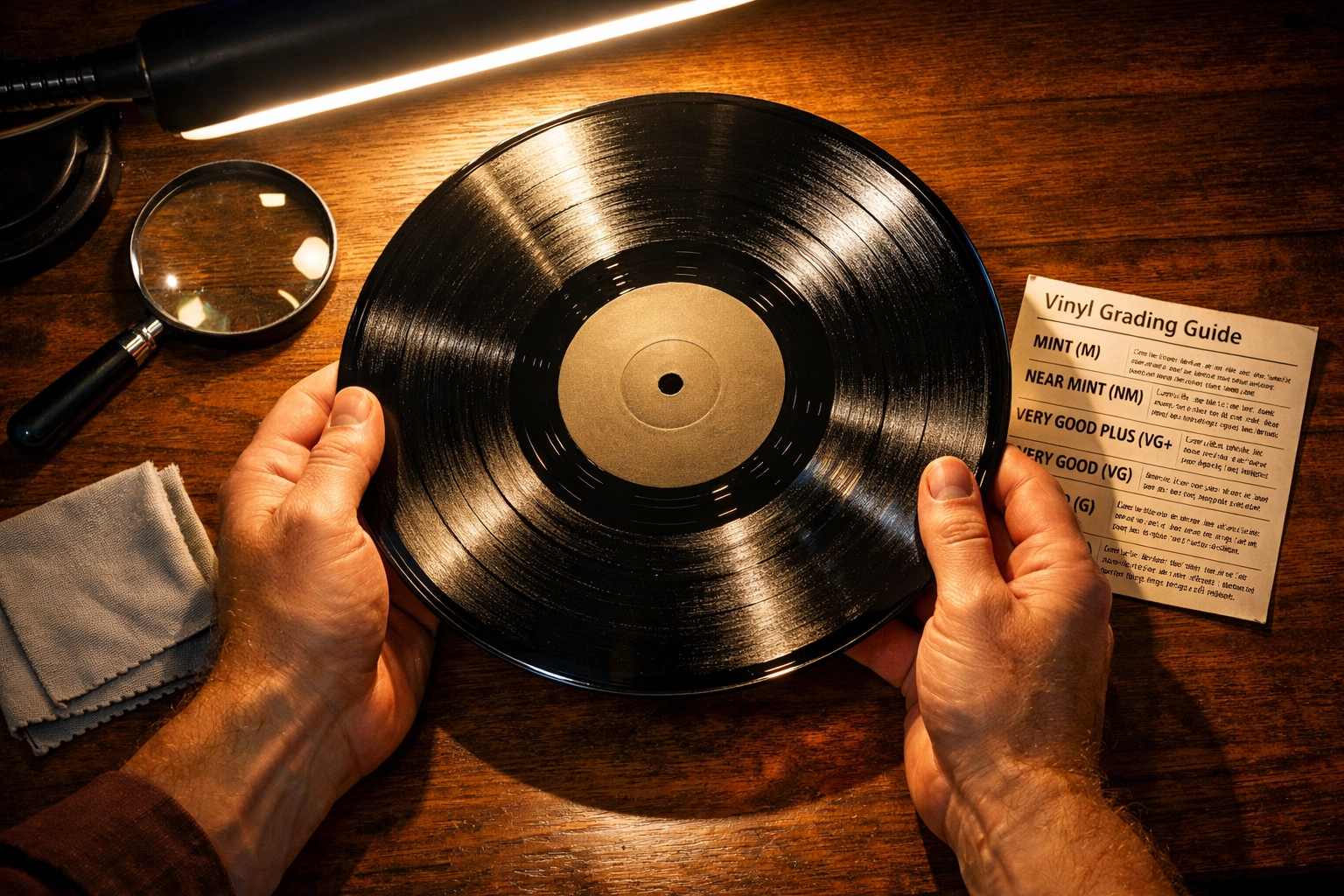
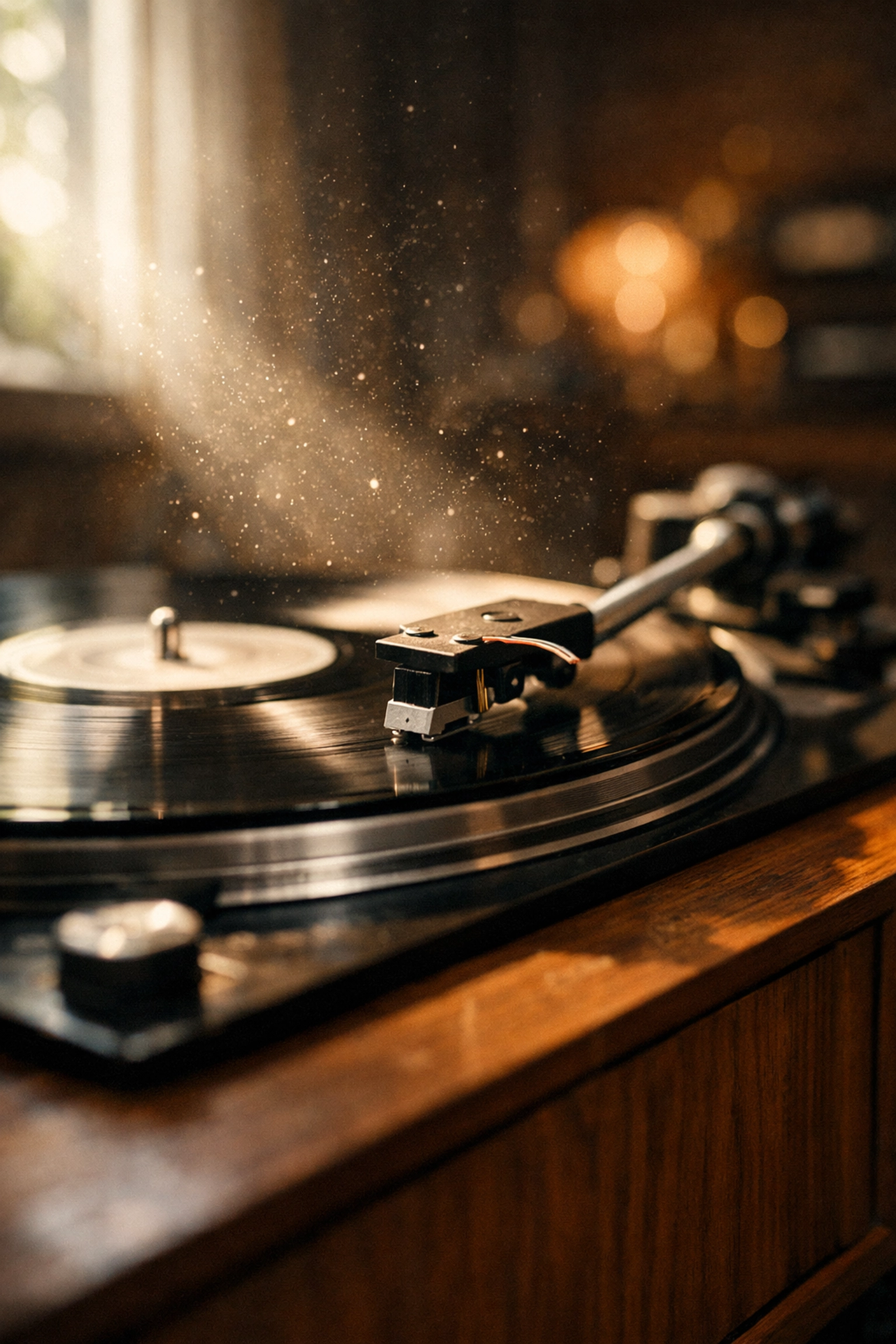
Lighting is everything. Hold the record under bright LED lighting. Tilt it at different angles. Scratches and scuffs are way more visible this way.
Look for:
- Surface marks and hairlines
- Visible scratches (do they catch your fingernail?)
- Groove wear (does the vinyl look dull instead of glossy?)
- Warp (hold it up and look across the surface)
- Edge nicks or chips
Listen for:
- Pops and clicks
- Surface noise or crackle
- Distortion
- Skipping or repeating
Be honest. We can tell the difference between "played a few times" and "played 500 times."
Grading Your Own Records: The Cover 📦
The cover gets its own grade because sometimes you'll have a NM record in a VG cover (or vice versa). When grading covers, check for:
Ring wear: Those circular marks where the record has pressed against the cover over time. Minor ring wear is common, heavy ring wear drops the grade.
Seam splits: Are the edges splitting open? A 1-inch split at the top is minor. A split running the entire side is significant.
Corner wear: Bent corners, creases, or dings.
Writing or stickers: Is there a name written on the front? A price sticker on the back? These affect value.
Water damage or stains: Pretty self-explanatory. These drop the grade fast.
Completeness: Are the original inserts, posters, or lyric sheets included?
At Nivessa, we grade vinyl and covers separately. A record might be tagged as "VG+/VG" (vinyl is VG+, cover is VG). This transparency helps you know exactly what you're getting.
Why Grading Matters at Nivessa 🤝
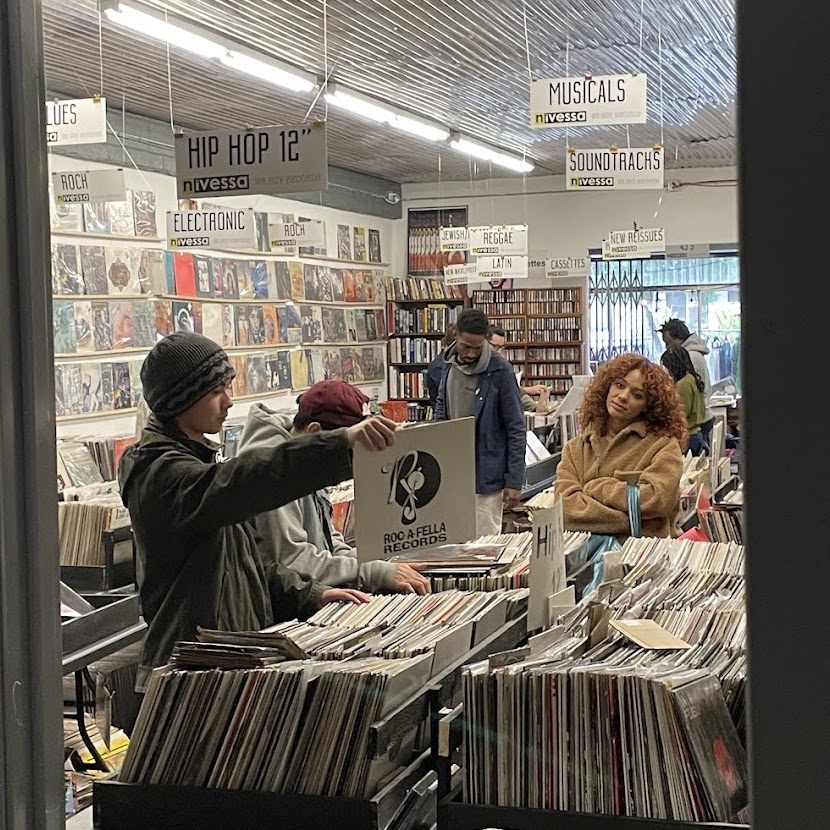
When you bring your collection to our Pico or Hollywood location, we're not just throwing out random numbers. We're using the Goldmine Standard to give you a fair, accurate assessment.
Here's how it works:
- You bring your records in
- We examine both vinyl and covers under proper lighting
- We spot-check playback on key titles
- We grade using the Goldmine Standard
- We make you a cash or trade credit offer based on condition and demand
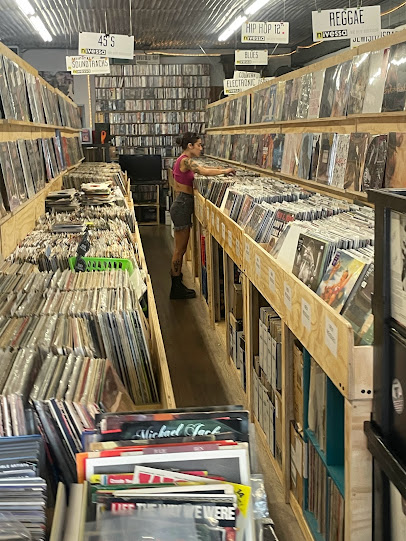
For buyers: Our price tags tell you exactly what grade you're buying. No surprises when you get home.
For sellers: We explain our grading decisions. If we call something VG+ instead of NM, we'll show you why.
For traders: Higher grades = higher trade credit. It's that simple.
Pro Tips for Accurate Grading 💡
Don't overgrade your own stuff. We all think our collections are in better shape than they are. Be realistic. A record you bought used in 1998 and played 50 times is not Near Mint.
Consider the era. Older pressings (60s, 70s) rarely survive in NM condition. A clean VG+ Beatles record is actually impressive.
Know the difference between VG+ and NM. This is where most disagreements happen. If you see visible scratches, it's not Near Mint. Period.
Clean your records first. Dust and grime make records look worse than they are. A proper cleaning can reveal the true condition.
When in doubt, grade down. It's better to undersell and pleasantly surprise than to overgrade and disappoint.
Ready to Grade Your Collection?
Whether you're buying your first record or bringing in a 500-piece collection, understanding the Goldmine Standard puts you in control. You know what to expect, what to pay, and what your records are worth.
At Nivessa, we've built our reputation on honest grading and fair pricing. Bring your records to our Pico or Hollywood locations, and we'll walk you through the grading process. No pressure, no B.S.: just straight talk about condition and value.
Because at the end of the day, every record tells two stories: the music on the grooves and the care it received over the years. Both matter.
Got questions about a specific record in your collection? Stop by either location. We're always happy to talk vinyl, grading, and everything in between.