Inner Sleeves: The Unsung Heroes of Vinyl Protection
Inner Sleeves: The Unsung Heroes of Vinyl Protection
![[HERO] Inner Sleeves: The Unsung Heroes of Vinyl Protection](https://cdn.marblism.com/l_CB98HzwNn.webp)
You've just scored a pristine first pressing of your favorite album. You baby it home, clean your turntable, lower the needle with surgical precision... and hear a pop. Then another. Then surface noise that wasn't there yesterday.
Here's the thing: you might be destroying your records without even knowing it. And the culprit? Those cheap paper inner sleeves that came with the album.
Let's talk about the most overlooked piece of vinyl care equipment you'll ever buy.
What Inner Sleeves Actually Do 🛡️
Inner sleeves are the layer between your record and everything else in the world. They're the first line of defense against scratches, dust, static electricity, and moisture. They make direct contact with your vinyl every single time you pull it out or slide it back in.
Think of them like the screen protector on your phone. You wouldn't leave a $1,000 device unprotected, right? Same logic applies to your vinyl collection: especially when you're hunting down rare pressings or dropping serious cash on new releases.
But here's what most people don't realize: not all inner sleeves are created equal. In fact, most of the sleeves that come with your records are actively working against you.

Paper Sleeves: The Silent Collection Killer 📉
Those generic paper sleeves that come with most albums? They're cheap for a reason. They do the absolute bare minimum: keeping the record from rattling around loose in the jacket. But that's where the protection ends.
Paper sleeves create static electricity every time you slide your record in and out. Static attracts dust. Dust gets into your grooves. Grooves get damaged. Your listening experience suffers.
Worse yet, paper sheds microscopic fibers that settle into the grooves of your records. Over time, those fibers cause pops and clicks that sound like surface damage: because they basically are. You're grinding paper debris into your vinyl with every play.
And if you live anywhere with humidity? Paper sleeves absorb moisture. That moisture can lead to mold growth, warping, and even cause the sleeve to stick to the record itself. Try peeling a damp paper sleeve off a vintage pressing without your heart rate spiking.
The bottom line: paper sleeves are temporary packaging, not long-term protection.
The Anti-Static Solution ⚡
Enter the anti-static poly-lined inner sleeve: your record's new best friend.
These sleeves are made from materials that don't generate static electricity. No static means no dust magnetism. No dust means cleaner grooves. Cleaner grooves mean better sound and longer record life. It's that simple.
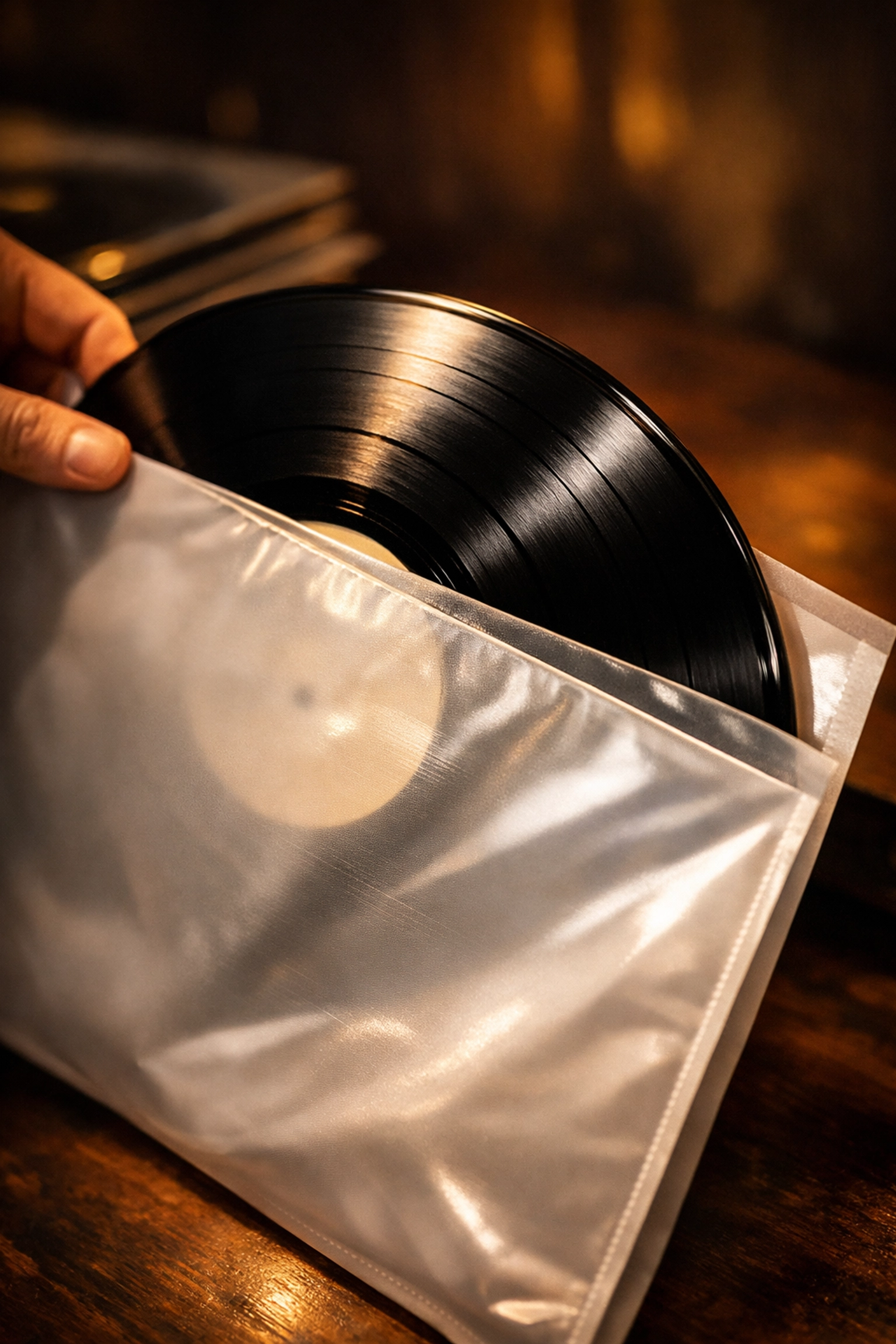
The best options are made from HDPE (High-Density Polyethylene) or feature a poly lining combined with paper backing for added structure. They're smooth, they don't shed fibers, and they actually repel dust instead of attracting it.
When you slide your record into an anti-static sleeve, you're not creating friction: you're creating a seal. The sleeve glides against the vinyl surface without generating charge. Your record stays cleaner between plays, and you're not micro-scratching the surface every time you access your collection.
Material Breakdown: What to Look For 🔍
Let's get specific about what you should be buying:
HDPE/Polyethylene Sleeves: These are the gold standard. They're anti-static, they don't stick to records, and they're archival-quality. They'll outlast your turntable. Look for sleeves labeled "audiophile-grade" or "archival" if you want the best protection.
Rice Paper or Mylar Sleeves: These offer superior dust protection and anti-static properties. They're slightly more expensive, but if you're serious about preservation, they're worth every penny.
Hybrid Paper-Poly Sleeves: Paper on the outside for structure and easy labeling, poly lining on the inside for protection. These are the sweet spot for most collectors: affordable and effective.
What to Avoid: Stay far away from PVC sleeves. When exposed to heat (which happens in storage), PVC can offgas chemicals that leach into your vinyl and cause irreversible damage. It's not worth the risk.
What Happens When You Don't Upgrade 💔
We see it all the time at both our locations. Someone brings in a collection that's been stored for years in original paper sleeves. The records themselves might be rare, valuable pressings: but the condition has degraded to the point where they've lost significant value.
Here's what cheap sleeves will do to your collection over time:
Surface scratches from paper friction that show up as pops and clicks during playback. Static buildup that attracts every particle of dust in your room. Paper fibers embedded in grooves that are nearly impossible to remove. Ring wear where the edge of the record grinds against the jacket. Moisture absorption that leads to warping or mold.
And here's the kicker: once that damage is done, it's permanent. You can't un-scratch a record. You can't remove surface noise caused by years of paper-on-vinyl contact. You can't restore a warped record to perfect flatness.
Prevention is everything in vinyl care. Upgrading your inner sleeves is the easiest, cheapest form of insurance you can buy for your collection.
Making the Switch: Easier Than You Think 🔄
You don't have to re-sleeve your entire collection in one weekend (though some collectors do exactly that). Start with your most-played records and your most valuable pieces. Those are the ones taking the most wear anyway.
When you buy new records, immediately swap out the paper sleeve before you even play it the first time. Make it part of your routine: right there with cleaning the record and dusting your stylus.
If you're picking up used records, check the inner sleeve condition. At Nivessa, we often replace sleeves on our used inventory before it hits the floor, but not every shop does this. Budget a few extra bucks for new sleeves if you're buying vintage pressings.
Bulk packs of quality inner sleeves are surprisingly affordable. You can find 50-packs of anti-static sleeves for around $20-30. That works out to less than 50 cents per record. It's a no-brainer investment.
The Difference You'll Actually Hear 🎵
Here's where theory meets reality: upgraded inner sleeves make an audible difference in your listening experience.
When you eliminate static, you eliminate one of the primary causes of surface noise. Your records will sound quieter in the silent passages: you'll hear the music, not the crackle. The soundstage will be cleaner. Details you couldn't hear before will emerge from the mix.
It's especially noticeable on quieter recordings: jazz, classical, acoustic albums where every little pop or click stands out. But even on louder rock or electronic records, you'll notice the difference. Less noise means you're hearing more of what the artist and engineer intended.
And over the long term? Your records will maintain their sound quality instead of degrading with each play. That pristine pressing you bought today will still sound pristine in five years, ten years, twenty years.
Your Collection Deserves Better 📀
Look, vinyl collecting isn't a cheap hobby. Between new releases, used gems, and the occasional splurge on that grail record you've been hunting for years, you're investing real money into your collection. Why would you skimp on the most basic level of protection?
Inner sleeves are unsexy. They don't show up in Instagram photos of your setup. Nobody's going to compliment you on your sleeve upgrade the way they might notice your turntable or speakers.
But they're the foundation of vinyl care. They're the difference between a collection that holds its value and one that slowly deteriorates. They're what separates collectors who truly care about their records from people who are just playing at it.
When you're flipping through bins at our Pico or Hollywood locations, you're touching records that we've taken care of: often with upgraded sleeves, proper cleaning, and careful storage. That's the level of care your own collection deserves.
Stop letting paper sleeves slowly wreck your vinyl. Make the upgrade. Your ears: and your future self: will thank you.
Stop by either of our LA locations and ask us about our selection of archival-quality inner sleeves. We'll help you find the right option for your collection and your budget. Because at Nivessa, we're not just about selling records: we're about helping you preserve them for the next generation of listeners.