On the Move: How to Safely Transport Your Record Collection
On the Move: How to Safely Transport Your Record Collection
![[HERO] On the Move: How to Safely Transport Your Record Collection](https://cdn.marblism.com/f0llrL2pcEj.webp)
Moving sucks. Moving with a vinyl collection? That's a whole different level of stress.
Whether you're relocating across town or across the country, your records deserve better than being tossed in random boxes and hoping for the best. Warped vinyl, cracked sleeves, and scratched grooves are real nightmares, and they're 100% preventable with the right approach.
Let's break down exactly how to move your collection without destroying what you've spent years building.
Why Vinyl Transport Is Different 🚚
Your records aren't books. They're not dishes. They're temperamental pieces of polyvinyl chloride that warp when it's too hot, crack when they're packed too tight, and scratch when they shift around during transport.
Vinyl records also weigh more than most people realize. A box of 50-60 records can easily hit 60-70 pounds. That's why proper packing isn't just about protecting the records, it's about protecting your back, your boxes, and whoever's helping you move.
Choosing the Right Boxes 📦
Skip the giant moving boxes. Seriously. That massive wardrobe box is not your friend here.
The best boxes for records are:
- Record-specific boxes designed for 12" LPs (sold at most moving supply stores)
- U-Haul small boxes (1.5 cubic feet), record dealers swear by these
- Sturdy, double-walled cardboard boxes that can handle 50+ pounds
Why smaller boxes? Two reasons: weight distribution and structural integrity. A small box filled with 50-60 records stays manageable. A large box packed with 150 records becomes a 200-pound disaster waiting to collapse.
When you get your boxes:
- Inspect them for damage or weak spots
- Reinforce the bottom with extra-strong filament tape
- Create a tape "cross" on the bottom for maximum support
- Consider double-taping the bottom flaps, it's worth it
The Art of Packing Records Vertically 📚
Here's the golden rule: always pack records vertically, never flat.
Stacking records horizontally puts all that weight on the bottom records, which leads to sleeve damage, ring wear, and potential warping. Vertical packing distributes weight evenly and mirrors how records are stored on shelves.
The packing process:
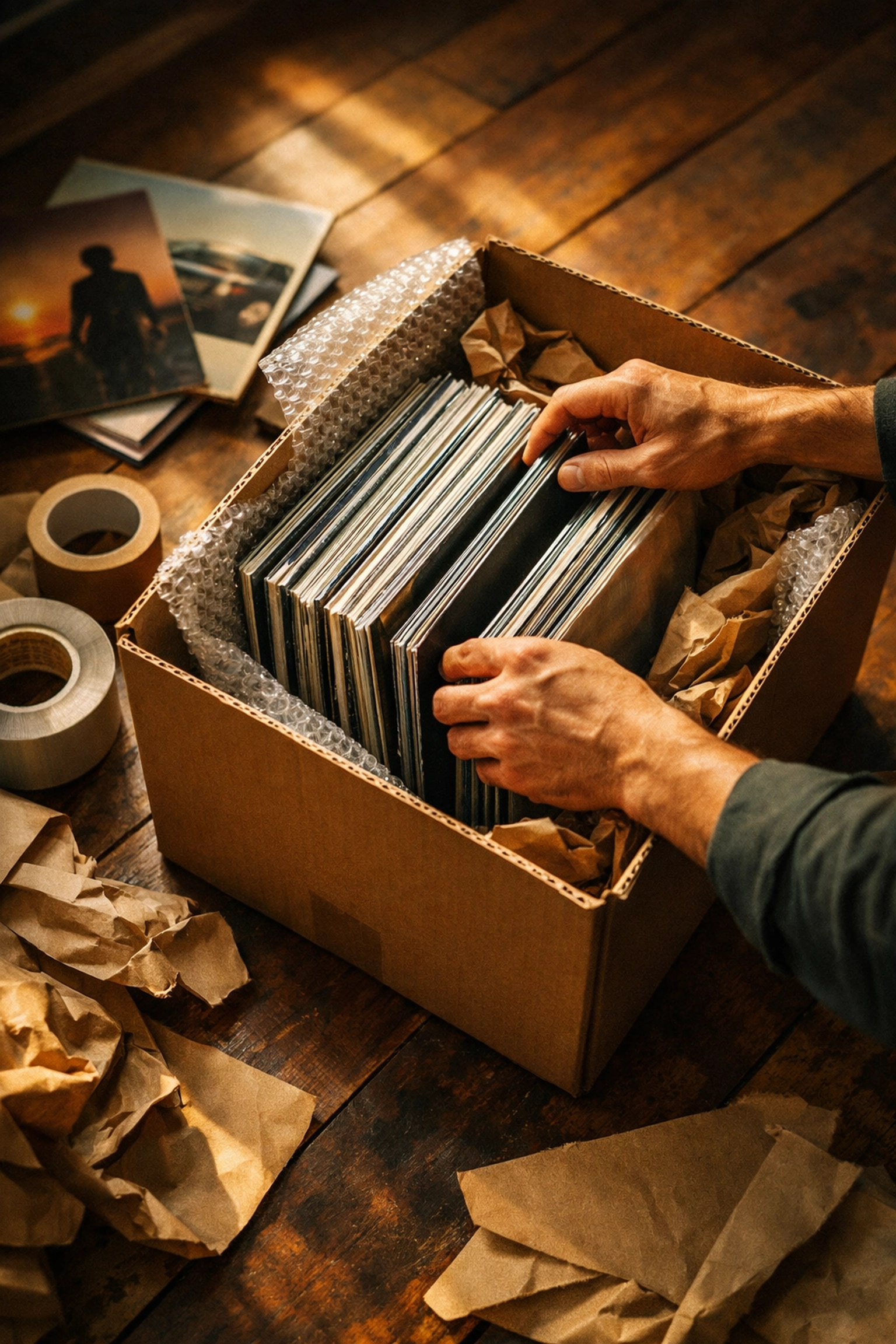
- Keep records in their protective sleeves (if you don't have outer sleeves, now's the time to invest)
- Pack them snugly in the box, they shouldn't shift, but they shouldn't be crammed either
- Fill gaps with packing paper, bubble wrap, or foam inserts
- Add extra padding at both ends of the box
- Leave a little breathing room at the top
Too tight = stress cracks. Too loose = records shifting and banging into each other. You're looking for the Goldilocks zone where records feel secure but not squeezed.

Pro tip: Keep like-sized records together. Don't mix 12" LPs with 7" singles in the same box, the size difference creates gaps and instability.
Understanding Weight Limits ⚖️
Let's talk numbers. A standard 12" vinyl record weighs about 120-140 grams (roughly 5 ounces). That means:
- 50 records = approximately 60 pounds
- 75 records = approximately 90 pounds
- 100 records = approximately 120 pounds
Keep your boxes between 50-70 pounds max. Yes, even if the box could physically hold more. Your back (and your movers' backs) will thank you.
If you're moving a massive collection, you'll need more boxes. That's fine. Better to have 10 manageable boxes than 5 back-breaking ones.
Label each box with:
- "FRAGILE - VINYL RECORDS"
- "THIS SIDE UP" with arrows
- Weight estimate
- Contents (by genre or alphabetically, if you're organized like that)
- Room destination at your new place
Temperature Control Is Critical 🌡️
Vinyl's worst enemy isn't just physical damage, it's heat. Records start softening around 140°F, and they can warp permanently in hot environments.
During transport:
- Use an air-conditioned vehicle whenever possible
- Never leave records in a hot car or truck bed
- Avoid direct sunlight, keep boxes away from windows
- Don't pack records against hot surfaces (like truck walls in summer)
- If you're moving in summer, move early in the morning or late in the evening
Temperature sweet spot: Keep your records between 65-85°F during the move. If you're using a moving truck without climate control, work fast and keep doors closed when not loading.
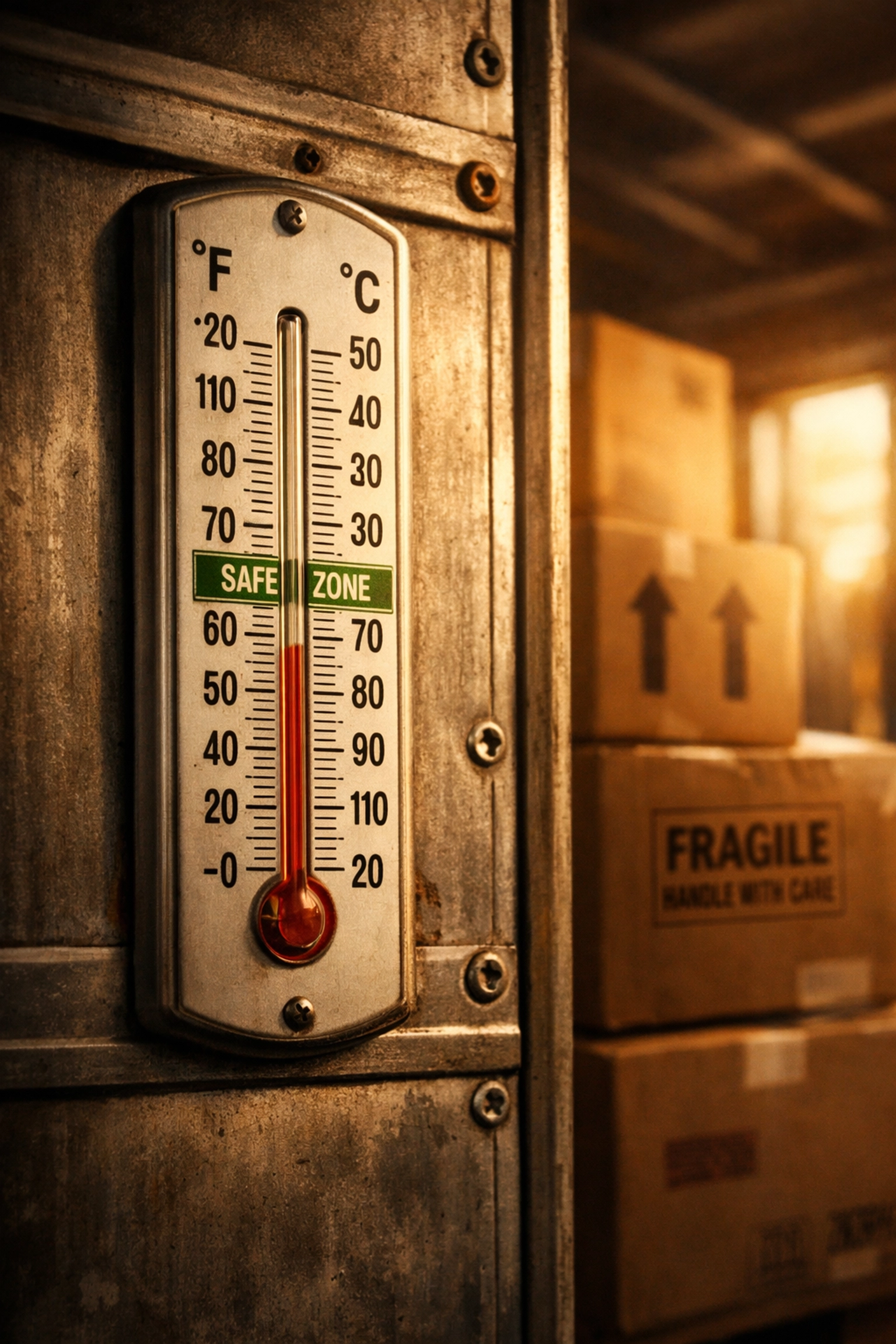
If you're storing records temporarily between moves, spring for climate-controlled storage. It's worth the extra cost to avoid coming back to a collection of warped frisbees.
Loading Your Moving Vehicle 🚐
Where you put your records in the truck matters.
Best placement:
- Near the cab of the truck (less movement during transit)
- Away from the back doors (prevents shifting when you brake)
- On the floor level, not stacked high
- Surrounded by soft items like bedding or pillows for cushioning
Stack boxes carefully:
- Place heavier boxes on the bottom
- Don't stack more than 3-4 boxes high
- Use straps or rope to secure stacks
- Fill gaps between boxes to prevent sliding
Avoid placing anything heavy on top of record boxes. Just because the box is sturdy doesn't mean you should put your dumbbell set on top of your Beatles collection.
Special Considerations for Valuable Records 💎
If you've got first pressings, rare imports, or records worth serious money, consider transporting them separately in your personal vehicle. Keep them:
- In the passenger area with air conditioning
- In a smaller box you can personally monitor
- Away from windows and direct light
- With extra padding and protection
Some collectors even transport their most valuable records in their sleeves without outer boxes for maximum control. If you're comfortable carrying them, this eliminates the risk of box failure entirely.
Unpacking at Your New Place 🏠
You made it! Your records survived the journey. Now don't screw it up during unpacking.
Set up your storage first. Before you start ripping open boxes, have your shelves, crates, or storage systems ready. This minimizes how long records sit in boxes (which aren't great long-term storage).
Unpack methodically:
- Inspect each box for damage before opening
- Check records for warping, sleeve damage, or shifting
- Remove records from boxes within 24-48 hours
- Let records acclimate to room temperature if they've been in a hot/cold truck
Inspect for damage early. If you hired movers and something's damaged, document it immediately for insurance purposes.
Quick Checklist: Moving Day Essentials ✅
Pack this moving day kit:
- Extra packing tape (always run out)
- Permanent marker for labeling
- Scissors or box cutter
- Spare packing paper
- Hand truck or dolly (60-pound boxes are no joke)
- Work gloves (cardboard + tape = rough on hands)
- Water and snacks (you'll be moving for hours)
What About Shipping Records?
If you're not physically moving but need to ship records across distances:
USPS Media Mail is the cheapest option (around $35 per box) but requires you to haul boxes to the post office. It's slow but economical for large collections.
UPS/FedEx costs more but offers tracking, insurance, and pickup services. Worth it for valuable collections.
Professional moving companies can handle everything, but get quotes first: costs vary wildly.
For shipping, pack even more conservatively than for personal transport. Your boxes will be handled by multiple people and possibly thrown around. Double-box valuable records and use insurance.
The Bottom Line
Moving your record collection doesn't have to be terrifying. With the right boxes, careful packing, attention to weight limits, and temperature control, your vinyl will arrive at your new place in the same condition it left.
Take your time. Don't rush. And remember: it's better to make two trips than to risk dropping a box because you were impatient.
Your records have survived decades of play, storage, and crate-digging. They can survive one more move: as long as you treat them right.
Need help evaluating your collection before or after a move? Swing by Nivessa: we've seen it all, and we're always happy to talk vinyl, whether you're buying, selling, or just want to chat about that rare pressing you're worried about transporting. We've moved more collections than we can count, and we're here to help make sure yours survives the journey too.