Stored to Last: How to Organize and Protect Your Collection
Stored to Last: How to Organize and Protect Your Collection
![[HERO] Stored to Last: How to Organize and Protect Your Collection](https://cdn.marblism.com/m2sdP4gmREc.webp)
You've spent years building your vinyl collection. Hours digging through crates, tracking down rare pressings, dropping serious cash on that first-press Blue Note. Now it's time to make sure those records last another 50 years: or longer.
Storage isn't sexy. But it's the difference between a collection that appreciates in value and a stack of warped, moldy disappointments. Let's talk about how to do it right.
📏 The Vertical Rule: Never Break It
Here's the most important thing you need to know about storing vinyl: always store records vertically, never horizontally.
Stacking records flat is a death sentence. The weight of records on top crushes the ones below, causing warping and permanent damage. Even just five or six records stacked horizontally for a few months can cause problems. A stack of 20? You're asking for trouble.
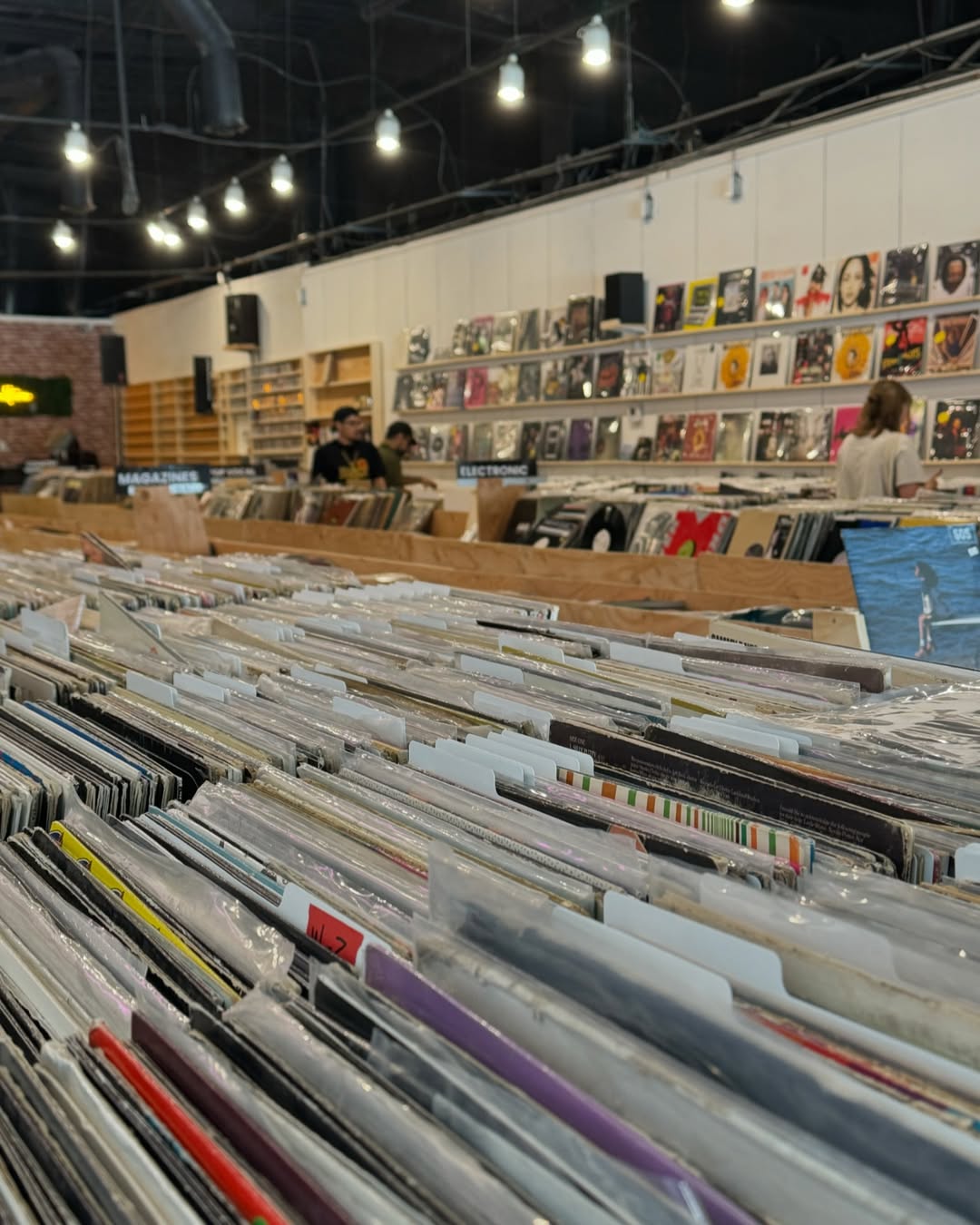
Vertical storage distributes weight evenly across the spine of each record. It's how records are meant to be stored: just like in every record store you've ever visited.
Your records should stand upright like books on a bookshelf. Keep them snug enough that they support each other, but not so tight that you're bending them when you pull one out. If you can't slide a record out with one hand without disturbing its neighbors, your bins are too tight.

🌡️ Temperature & Environment: The Silent Killers
Vinyl is basically plastic, and plastic hates two things: heat and UV light.
Keep your collection away from:
- Direct sunlight (even through windows)
- Heating vents and radiators
- Attics and garages (temperature extremes will warp your records)
- Basements (unless climate-controlled: moisture is another enemy)
- Exterior walls that get hot in summer
The ideal storage temperature is between 65-70°F with humidity around 45-50%. You don't need a perfect environment, but consistency matters more than anything. Wild temperature swings cause records to expand and contract, leading to warping and groove damage.
If you live somewhere with extreme seasons, avoid storing records in spaces that aren't climate-controlled. That means no attics in Arizona, no unheated garages in Minnesota. Your living space is usually the best option.
Sunlight will fade your album covers and can actually degrade the vinyl itself over time. Even indirect sunlight through a window can cause damage over years. Keep your collection away from windows, or use curtains to block UV rays.
🪑 Shelving Solutions: The Kallax Standard
Let's talk shelving. You need something sturdy, the right depth, and ideally, modular so you can expand as your collection grows.
Enter the IKEA Kallax (formerly Expedit). It's become the default choice for vinyl collectors for good reason:
Why collectors love Kallax:
- Each cube is roughly 13" x 13": perfect for 12" records
- Holds approximately 50-70 records per cube depending on thickness
- Modular design lets you stack and expand
- Available in multiple configurations (2x2, 2x4, 4x4, etc.)
- Affordable and widely available
- Strong enough to handle serious weight
A fully loaded 4x4 Kallax can hold around 800-1,000 records and weigh over 500 pounds. Make sure you anchor it to the wall.
Alternatives to Kallax:
- BestÅ units (also IKEA, slightly larger cubes)
- Custom wooden crate storage
- Vintage library card catalogs (if you can find them)
- Purpose-built vinyl storage from brands like Boltz or Record Album
Whatever you choose, make sure the shelves are deep enough (at least 13.5" for 12" records with room to flip) and can handle the weight. Vinyl is heavy: a single record weighs about 4-6 ounces, meaning 100 records weigh 25-40 pounds.
🛡️ Protective Materials: Inner & Outer Sleeves
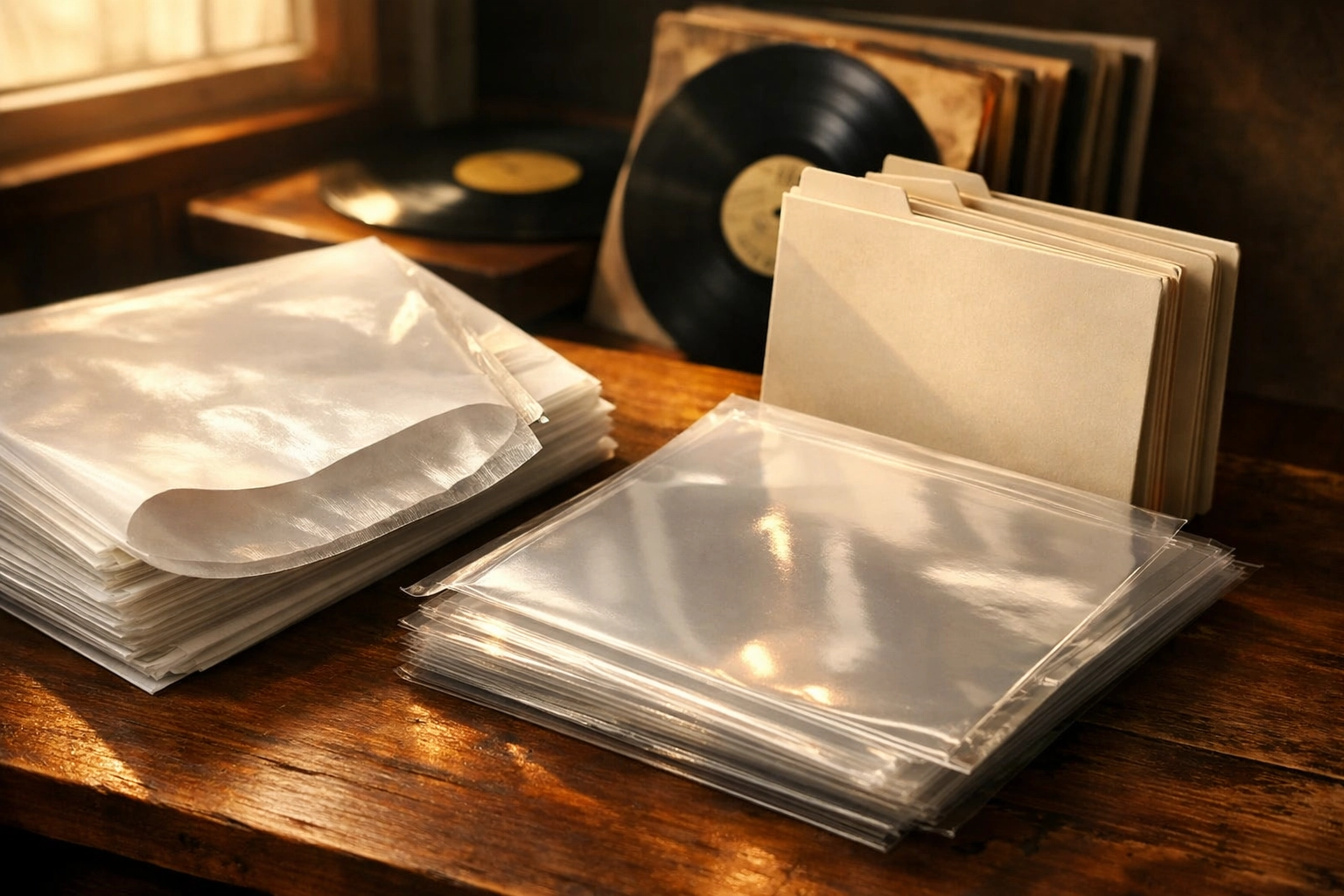
Your records came with paper inner sleeves. Those are garbage. Replace them.
Inner sleeves protect the vinyl itself from dust and scratches. Upgrade to:
- Poly-lined paper sleeves (Mobile Fidelity or Sleeve City)
- High-density polyethylene (HDPE) sleeves
- Rice paper sleeves (if you want something more archival)
Paper sleeves shed paper dust that gets in your grooves. They also create static. Poly-lined sleeves eliminate both problems and cost about 30-50 cents each. It's worth it.
Outer sleeves protect your album covers from ring wear, corner dings, and shelf wear. They're especially important for valuable records or anything with a gatefold cover. Look for:
- 3-mil polyethylene sleeves for standard protection
- 5-mil for extra durability
- Resealable sleeves if you want to open and close them repeatedly
Keep your records in their outer sleeves even on the shelf. The small extra width per record adds up, so account for this when planning shelf space.
🗂️ Organization Systems: Make It Accessible
A collection you can't navigate is a collection you won't use. Figure out an organization system that works for your brain.
Popular organization methods:
- Alphabetical by artist (most common, easiest for finding specific albums)
- Genre-based (great if you listen by mood)
- Chronological by purchase date (works for small collections)
- Label-based (for collectors focused on specific imprints)
- Personal rating/play frequency (keep favorites up front)
Most collectors use alphabetical within genre categories. All your Jazz together, alphabetized. All your Rock together, alphabetized. It's a good middle ground.
Pro tips for organization:
- Use dividers to mark sections (genre, letter, whatever system you choose)
- Keep a digital spreadsheet or use Discogs to catalog your collection
- Consider separate sections for "to listen," "favorites," and "general collection"
- Store 7" singles separately: they get lost among 12" records
⚠️ Common Storage Mistakes to Avoid
Even experienced collectors make these mistakes. Don't be that person.
Never store records:
- In their shrinkwrap long-term (traps moisture, causes ring wear)
- Without inner sleeves (vinyl touches vinyl = scratches)
- In cardboard boxes long-term (acid in cardboard damages covers)
- Near speakers or subwoofers (vibrations cause micro-damage)
- In plastic bins unless they're ventilated (trapped moisture)
Always:
- Store records in their jackets (keeping them separately causes mix-ups)
- Remove any inserts, posters, or extras before playing (prevents damage)
- Keep your collection off the floor (moisture, pests, accidents)
- Maintain some airflow around your shelves
- Clean records before storing them long-term
🧹 Maintenance & Care
Storage isn't a set-it-and-forget-it situation. Your collection needs occasional maintenance.
Every few months:
- Check for temperature or humidity changes in your space
- Look for signs of moisture, mold, or pest damage
- Reorganize any records that have shifted or are leaning
- Dust your shelves and the top edges of record jackets
- Rotate records if some are getting compressed by others
Annually:
- Inspect valuable records for any degradation
- Replace damaged inner or outer sleeves
- Consider upgrading storage as your collection grows
- Evaluate if your current location is still ideal
Your collection is an investment: in music, in culture, in personal history. Treat it like one.
The Bottom Line
Proper storage comes down to three things: vertical positioning, stable environment, and quality materials. Get those right and your collection will outlive you.
Start with good shelving (Kallax is fine, custom is better). Add proper inner and outer sleeves. Keep everything vertical, away from heat and light, and organized in a way that makes sense to you.
Your records don't need a museum-quality vault. They just need consistency, protection, and a little attention. Give them that, and they'll reward you with decades of listening.
Now stop stacking those records horizontally and get them on some proper shelves. Your collection will thank you.